

Wine and food pairing, reduced to five ideas.
Pairing is not a memory test. Almost every good match comes down to weight, acidity, sweetness, tannin and a sense of where the dish comes from. Learn those and you can improvise anywhere.
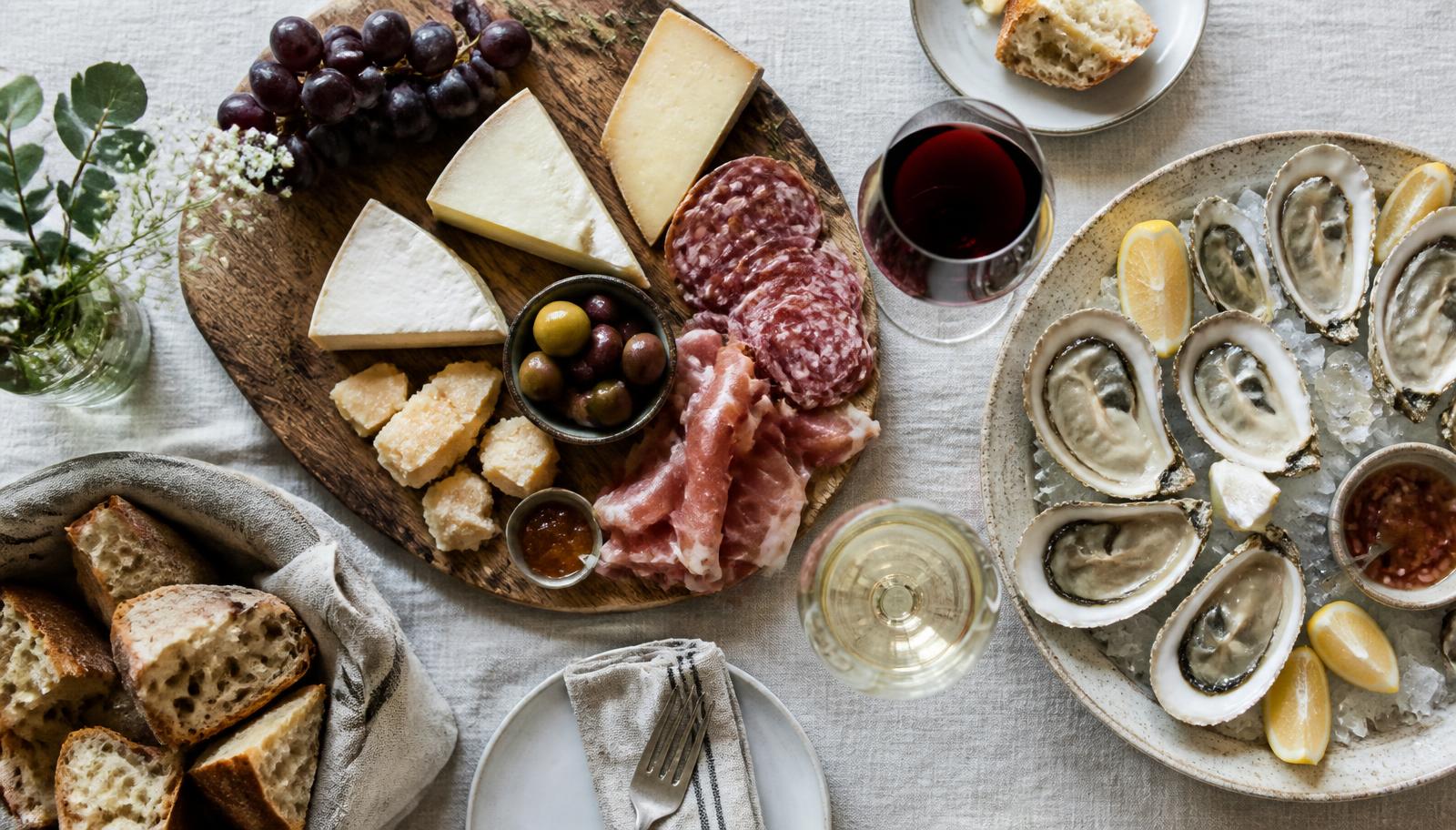
The five principles
- Step 01
Match the weight first
Light dishes need light wines; rich dishes need structure.
Body is the single most useful thing to get right. A delicate white fish is flattened by a big, oaky red, while a slow-braised beef shin makes a crisp light white taste like water. Think about the whole plate rather than the protein — a cream sauce or a heavy glaze can push a light dish into full-bodied territory.
- Step 02
Use acidity as the workhorse
High-acid wines cut fat and refresh the palate.
Acidity does what a squeeze of lemon does: it lifts richness and resets your mouth between bites. Fried food, cheese, buttery sauces and fatty fish all improve alongside crisp whites, dry or high-acid reds. The wine should also be at least as acidic as the dish, or a tomato sauce will make it taste flat and dull.
- Step 03
Keep the wine sweeter than the food
Sweet dishes strip sweetness out of the wine beside them.
Serve a dry wine with dessert and it will taste sour and thin. Choose something at least as sweet as the plate. The same principle explains the salty-sweet matches — blue cheese with Sauternes, prosciutto with off-dry — where sweetness balances salt rather than competing with it.
- Step 04
Treat tannin and spice carefully
Chilli amplifies alcohol and tannin; protein softens them.
Tannic reds taste smoother alongside protein and fat, which is why steak and Cabernet works. With spicy food, high alcohol and firm tannin both intensify the heat, so reach instead for lower-alcohol, off-dry whites and rosés, or a soft, juicy chilled red. Bitterness in the dish also sharpens tannin, so go gentler with charred and grilled greens.
- Step 05
Choose to complement or contrast — then trust the region
What grows together usually goes together.
You can echo flavours, such as an earthy with mushrooms, or set them against each other, like with salty fried food. When you are stuck, follow geography: the wine of a region evolved beside its food, which is why Sancerre suits goat's cheese and Chianti suits tomato-rich Tuscan cooking.
Go-to matches
Reliable starting points rather than laws. Each one follows at least one of the principles above.
Bone-dry, high-acid whites and traditional-method . Salinity beside salinity.
Almost anything, which is why it is the bottle test. with weight, or a lighter red.
Firm, tannic reds. Fat and protein soften the tannin and the wine cleans the palate.
High-acid reds. The wine has to match the acidity in the sauce or it will taste hollow.
or crisp whites cut through the fat far better than heavy reds.
Sweet wines. Salt and sweetness balance each other in a way dry wine cannot manage.
Off-dry, lower-alcohol whites and rosés. Sweetness cools heat; alcohol fuels it.
Earthy, savoury reds with moderate tannin — an echo pairing rather than a contrast.
Fortified reds. The wine needs sweetness and body to stand up to cocoa.
Rules of thumb
- Match body to body before you think about flavour.
- When in doubt, pick something crisp and dry — acidity flatters most food.
- is the most versatile pairing on almost any table.
- The sauce usually matters more than the protein.
- Serve the wine at the right temperature; a warm white ruins any pairing.
- Regional cooking and regional wine are a reliable shortcut.
Frequently asked questions
Is 'red wine with meat, white wine with fish' still true?
It is a rough guide, not a rule. It works because red wines tend to be fuller and more tannic and white wines lighter and more acidic. Weight and acidity are what actually matter — a light chilled red is excellent with salmon, and a rich white works well with roast pork.
What is the most versatile wine for a mixed menu?
Dry . Its acidity and bubbles refresh the palate between very different dishes. A crisp, unoaked dry white and a light, low-tannin red between them cover most of what remains.
Which wine goes with spicy food?
Off-dry whites and rosés with lower alcohol, such as an off-dry . Sweetness softens capsaicin heat, while high alcohol and firm tannin make it burn harder — so avoid big, oaky reds with genuinely hot dishes.
Can I drink red wine with cheese?
Sometimes, but white wine and are often better. The acidity cuts fat cleanly, while the tannin in many reds clashes with the salt and creaminess of soft cheeses. Hard aged cheeses are the main exception and pair well with structured reds.
What wine goes with pizza?
A high-acid, medium-bodied red. The acidity in tomato sauce needs a wine that can match it, and moderate tannin keeps up with cheese and cured meats without overwhelming the base.
What wine goes with sushi?
Bone-dry or a crisp, unoaked white. Both cope with soy and wasabi better than red, and their acidity refreshes between pieces. Skip oak, which clashes with delicate raw fish.
What wine goes best with turkey or a roast dinner?
Something medium-bodied and versatile — a low-tannin red or a fuller white with good acidity. The sides and gravy vary more than the bird, so pick a wine that stays flexible rather than one built for a single flavour.
Does wine need to match the sauce or the protein?
Usually the sauce. A cream, tomato or spiced sauce changes the weight and acidity of a plate far more than the protein underneath it, so pair to what dominates the mouthful.
Can I pair wine with vegetarian and vegan dishes?
Easily. Match the cooking method: roasted and grilled vegetables suit earthy medium reds, fresh salads and legumes suit crisp whites, and umami-rich mushrooms or miso suit savoury, lower-tannin reds.
What wine goes with chocolate?
A sweet, fortified red for dark chocolate, since the wine needs to be sweeter and richer than the dessert. Milk chocolate suits lighter sweet styles, and very dry reds are best avoided — cocoa makes them taste bitter.
Read next
The guides in this series build on each other. Here is where to go from here.
- A Guide to Wine Stylesthe wine styles behind each pairingSparkling to fortified, and what each brings to a plate.
- How to Taste Winetasting for weight, acidity and tanninThe three things every pairing decision depends on.
- How to Read a Wine Labelspotting sweetness and alcohol on a labelBuy the right bottle for the dish before you get home.
- Planning a Wine Tripeating and drinking your way through a regionRegional food and regional wine, tasted side by side.
- Winery Etiquettepairings at the cellar doorHow food-paired tastings work and when to book them.