

How to plan your first wine trip.
Wine travel rewards a little planning and punishes a lot of it. Here is the short version: pick one region, book the wineries you care about, sort out who is driving, and leave room for the detour someone recommends over lunch.
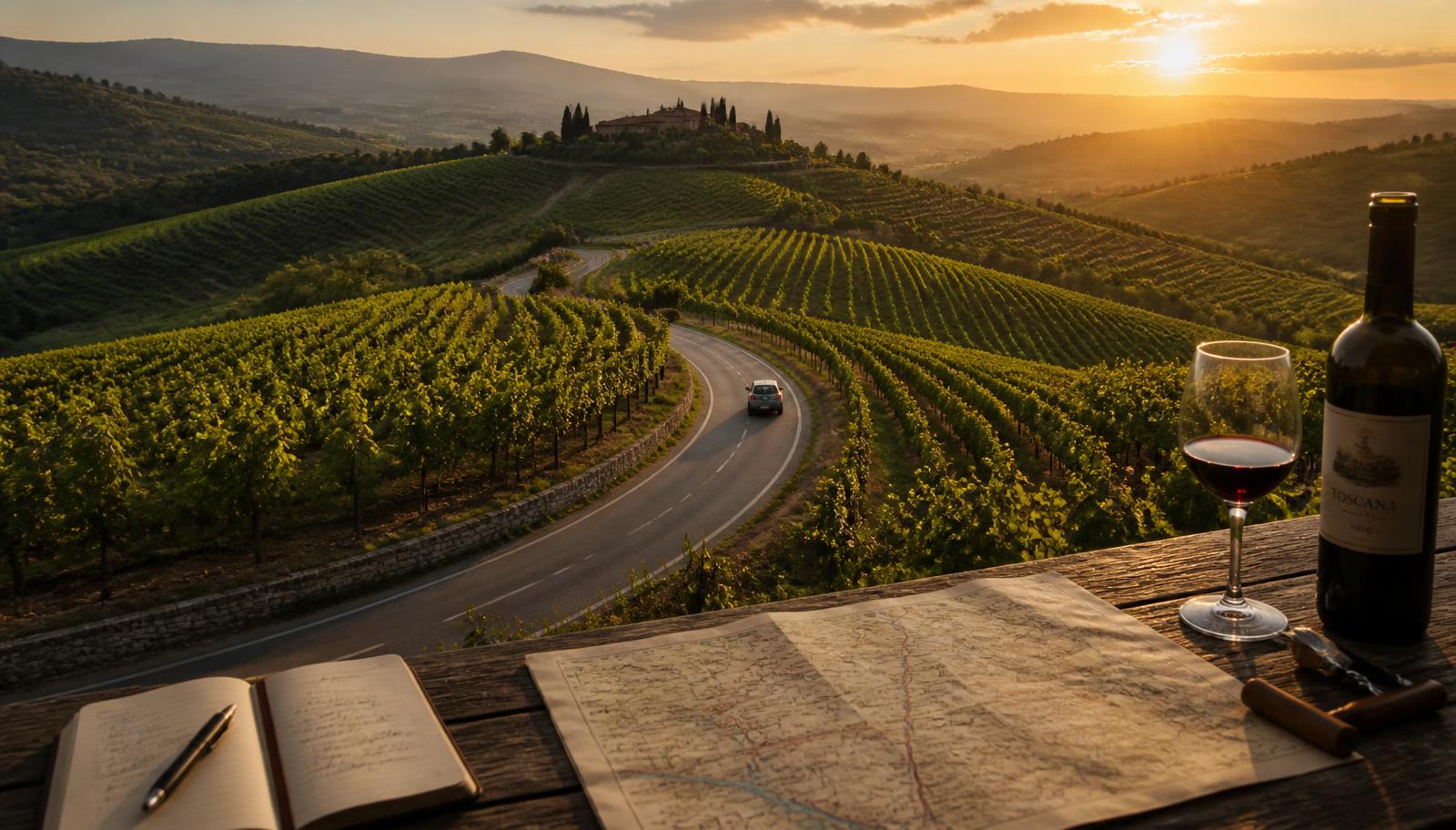
Five steps to a trip that works
- Step 01
Pick a region that matches the trip you want
Start with the experience, not the label on the bottle.
Decide whether you want walkable villages, a scenic drive, or a single luxurious base. Compact regions with tasting rooms close together suit short trips and non-drivers; sprawling regions reward a car and more days. If you already love a style of wine, work backwards from it — but check the season, because harvest, pruning and mid-winter closures change what a region feels like.
- Step 02
Choose your season and length
Three or four days in one region beats a week of driving.
Late spring and early autumn generally offer good weather and open cellar doors. Harvest is thrilling but the busiest time for producers, so bookings are harder and staff have less time to talk. Allow at least two full days per region, and treat two to three wineries a day as a comfortable maximum once you add travel, lunch and lingering.
- Step 03
Book tastings before you leave
Small producers are appointment-only far more often than travellers expect.
Reserve the wineries you most want to see first, then fill the gaps with drop-in cellar doors nearby. Tell the winery your group size, any mobility needs, and whether anyone isn't drinking. Confirm the fee, whether it's waived on purchase, and how long the tasting runs so you can space appointments two to three hours apart.
- Step 04
Solve transport before anything else
Someone has to not drink — plan who, or hire a driver.
A guided tour or private driver removes the problem entirely and is usually cheaper than it looks once split between four people. If you rent a car, nominate a designated driver who spits at every stop, and check local drink-driving limits, which are stricter than many visitors assume. Cycling works in flat, compact regions; taxis and rideshare are often unreliable in rural wine country.
- Step 05
Budget the whole day, not just the wine
Tasting fees are only part of the cost.
Count tasting fees, a proper sit-down lunch, transport, and the bottles you'll inevitably buy. Set a shipping plan early: many producers ship internationally, and knowing your home country's duty allowance keeps a good day from turning into a customs problem. Leave one afternoon unbooked — the best recommendations usually come from the person pouring your wine.
What to bring
Wine country is more rural and more temperature-swung than most itineraries assume. This short list covers almost every awkward moment.
Cellars are cold, gravel is common, and vineyard walks are muddier than the photos suggest.
Barrel rooms sit around 12–15 °C year round, even when it is 30 °C outside.
Perfume and scented lotion interfere with everyone's ability to smell the wine.
Tastings add up quickly and lunch reservations in wine country run late.
Cheap insurance for bottles you carry home in checked luggage.
By stop three, every wine blurs together. One line per wine is enough.
Before-you-go checklist
- Confirm every appointment 24–48 hours before you arrive.
- Check cellar-door opening days — many close Sunday and Monday.
- Ask whether lunch is available on site or whether you need a separate reservation.
- Tell wineries about allergies, wheelchairs, kids or dogs before arrival, not on the doorstep.
- Save offline maps; rural wine regions frequently have no mobile signal.
- Know your duty-free allowance and the winery's shipping options before you buy a case.
Frequently asked questions
How many wineries can I visit in one day?
Two to three is the realistic maximum for a full tasting experience. Each appointment runs 60–90 minutes, and you need travel time, lunch and a break between them. Four is possible only with a driver and short distances, and by the fourth stop most people's palates are done.
Do I need to book wine tastings in advance?
For small and mid-sized producers, almost always. Larger commercial cellar doors often accept walk-ins, but appointment-only visits have become the norm across most regions since 2020. Booking also secures the guide, the seated tasting, and any food pairing.
Is a guided wine tour worth it over driving myself?
If everyone in your group wants to drink, yes. A guided tour handles the driving, the route and the introductions, and guides often get you into producers who don't take public bookings. Self-driving is cheaper and more flexible but requires a genuinely sober driver.
What is the best time of year for a wine trip?
Late spring and early autumn generally combine good weather, open cellar doors and available staff. Harvest brings enormous energy but the least time from producers, and deep winter means shorter hours and some closures — always check individual opening times.
How much should I budget per day?
Costs vary widely by region, but plan for tasting fees at each stop, a restaurant lunch, transport or driver costs, and the bottles you buy. Many wineries waive the tasting fee if you purchase, so factor that in when comparing options.
How far in advance should I plan a wine trip?
Six to eight weeks is comfortable for most regions, and three to four months for harvest season or famous appellations where the best cellar doors book out first. Accommodation usually disappears before tastings do, so lock in where you sleep, then build the days around it.
Can I take wine home on a plane?
Yes, in checked baggage. Bottles must be padded or in a purpose-made wine shipper, and you need to stay within your destination’s duty-free allowance or declare the rest. Many wineries will ship for you instead, which is often cheaper than paying excess baggage.
Is it cheaper to buy wine at the winery?
Not always. Cellar-door prices tend to match or slightly beat retail, and the real value is access — small-batch, library and club-only bottles that never reach a shop. Many wineries also refund the tasting fee against a purchase.
How many days do I need in a wine region?
Two full days is the practical minimum for a single region: one for the headline producers, one for smaller estates and a long lunch. Three to four days lets you add a second sub-region without spending the trip in the car.
Should I visit during harvest?
Harvest is atmospheric but busy. Expect working wineries, shorter tastings and owners who are genuinely occupied. If you want unhurried conversation, come a few weeks before or after the picking window.
Do I need to speak the local language?
Rarely. Cellar doors in established tourist regions almost always have English-speaking staff. In small family wineries off the main routes, a translation app and a few polite phrases go a long way.
Read next
The guides in this series build on each other. Here is where to go from here.
- Winery Etiquettewinery etiquette for first-time visitorsEverything that happens once you actually walk into the tasting room.
- How to Taste Winehow to taste wine in five stepsThirty seconds of method makes every cellar door stop worthwhile.
- A Guide to Wine Styleswhich wine styles a region makesChoose regions by what you like drinking, not by what is famous.
- Wine & Food Pairing Basicspairing local food with local wineThe long lunch is half the itinerary — pair it properly.
- How to Read a Wine Labeldecoding the labels you'll buyUseful when you're shipping cases home from an unfamiliar appellation.