

A guide to wine styles.
Grape variety is only half the story. Climate, skin contact, oak and fortification decide what actually lands in your glass — and thinking in styles makes ordering, buying and pairing far easier than memorising grapes.
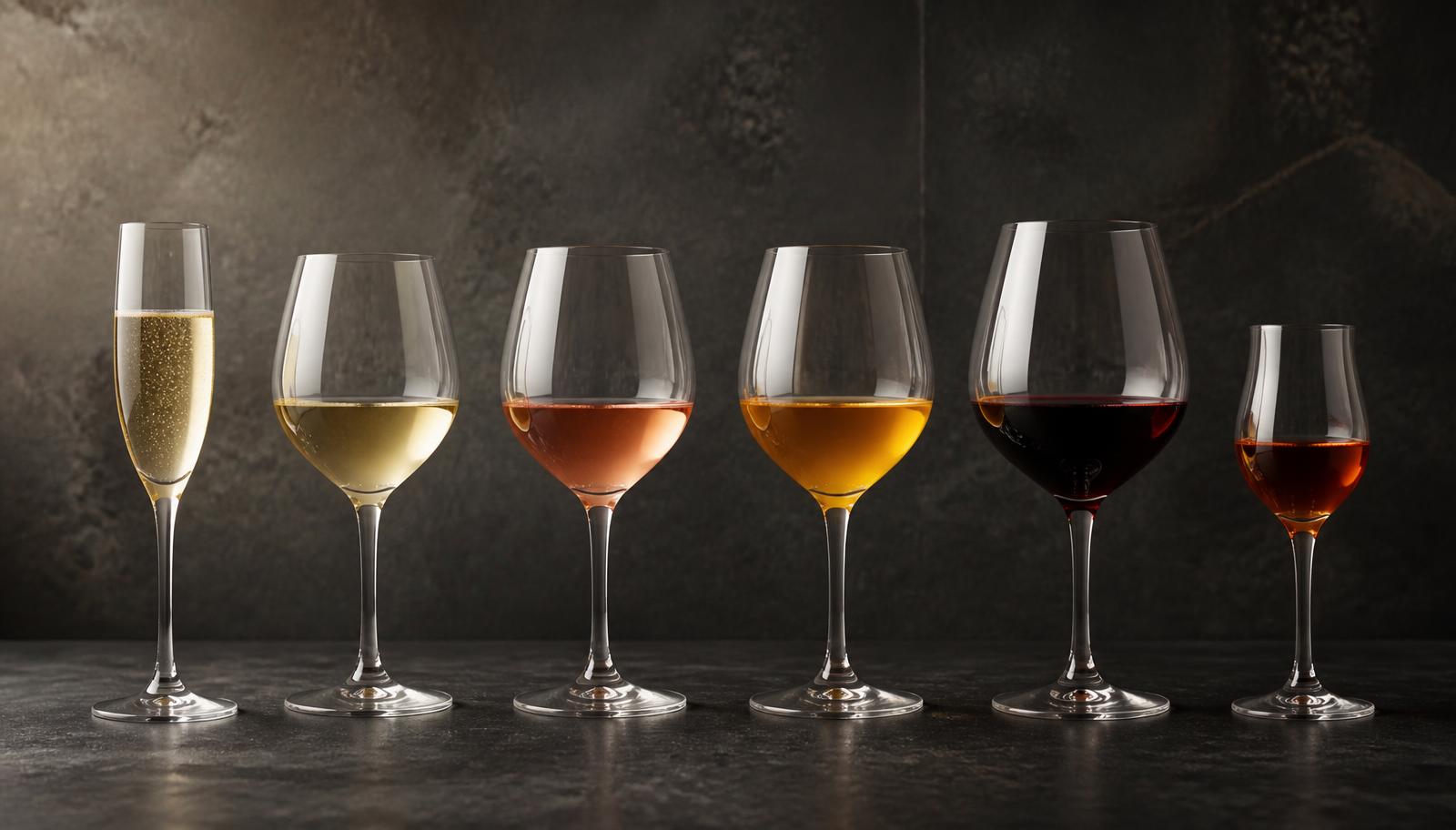
The main styles
- Step 01
Sparkling
Bubbles, high acidity and the most food-friendly category there is.
Made by trapping carbon dioxide from a second . The traditional method, used for Champagne and many premium sparkling wines, ferments in the bottle and adds bready, nutty depth; tank-method wines such as Prosecco stay fresher and more floral. Sweetness runs from Brut Nature to — Brut is dry. Serve at 6–8 °C.
- Step 02
Crisp, dry white
Light-bodied, unoaked and built around acidity.
Think citrus, green apple, herbs and sometimes a stony, saline edge. These wines come mainly from cool climates and stainless-steel , and they are the natural partner for shellfish, salads and fried food. Drink them young and cold, around 8–10 °C, and don't cellar most of them.
- Step 03
Rich, textured white
Fuller whites shaped by oak, lees ageing or warmer sun.
Stone fruit and citrus joined by vanilla, toast, cream or a savoury, bready character. Barrel , ageing on spent yeast and malolactic conversion all add weight and soften acidity. These handle roast chicken, pork and cream sauces, and the best examples age well. Serve slightly warmer, 10–13 °C, or the texture disappears.
- Step 04
Rosé and orange
Two categories defined by skin contact rather than grape colour.
Rosé is made from red grapes with only brief skin contact, giving red-fruit flavour with white-wine freshness; most modern styles are bone dry. Orange, or skin-contact, wine is the reverse — white grapes fermented on their skins — producing amber colour, gentle tannin and savoury, dried-fruit and tea-like notes. Both are unusually versatile at the table.
- Step 05
Light to medium red
Low to moderate tannin, bright acidity, often best slightly chilled.
Red cherry, cranberry, herbs and earth, with a texture closer to a white wine than to a heavy red. Cool-climate origins and gentle extraction keep them fresh. They suit salmon, charcuterie, mushroom dishes and anything you would otherwise serve with a rich white. Fifteen minutes in the fridge before serving makes most of them better.
- Step 06
Full-bodied red
Deep colour, firm tannin, higher alcohol and real ageing potential.
Black fruit, spice, tobacco and oak-derived vanilla or cedar, with a drying grip that softens over years in bottle. Warm climates and longer maceration build the structure. These are the steak and hard-cheese wines, and the category that benefits most from decanting. Serve at 16–18 °C, never at a warm room temperature.
- Step 07
Sweet and fortified
Sweetness by concentration, or strength by added spirit.
Sweet wines get their sugar from late harvesting, , drying grapes or freezing them on the vine, and the good ones stay lively because acidity balances the sugar. Fortified wines — Port, Sherry, Madeira, Marsala — have neutral spirit added, halting or following to give higher alcohol and, in many styles, remarkable longevity once opened.
Six cues that define a style
Every wine can be described with these six dials. Learn to read them and any unfamiliar bottle becomes predictable.
How heavy the wine feels. Alcohol level on the label is your best clue before opening.
The mouthwatering tartness that makes a wine feel fresh and food-friendly.
The drying grip in reds and orange wines, from grape skins, seeds and oak.
Residual sugar left after , from bone dry to lusciously sweet.
Vanilla, toast, coconut or cedar — a winemaking choice, not a grape flavour.
Fresh and tart fruit points to a cool climate; jammy, ripe fruit to a warm one.
Practical notes
- Sparkling and crisp whites: serve very cold, drink young.
- Rich whites and light reds: 10–15 °C is the useful middle ground.
- Full reds: 16–18 °C, and decant anything young and tannic.
- Rosé and orange wines cover more of the menu than either whites or reds alone.
- Alcohol on the label is the quickest guide to how full the wine will feel.
- Fortified wines keep for weeks after opening; most table wines do not keep past two days.
Frequently asked questions
What are the main styles of wine?
Broadly: sparkling, crisp dry white, rich or oaked white, rosé, orange or skin-contact, light red, full-bodied red, sweet, and fortified. Grape variety matters, but style is set as much by climate and winemaking choices as by the grape itself.
What is orange wine?
White wine made like a red — the juice ferments in contact with the grape skins, giving amber colour, light tannin and savoury notes of dried fruit, nuts and tea. It is an ancient method, still traditional in Georgia and revived widely since the 1990s.
Should red wine be served at room temperature?
Not at a modern room temperature. The old rule dates from cooler houses. Most reds show best between 13 °C for light styles and 18 °C for full-bodied ones, so twenty minutes in the fridge often improves a red that has been sitting out.
What is the difference between fortified and sweet wine?
Sweet wines get their sugar from the grapes, whether through late harvesting, , drying or freezing. Fortified wines have neutral grape spirit added, which raises alcohol and, if added during , leaves natural sugar behind. Some fortified wines, such as Fino Sherry, are completely dry.
What is the difference between Champagne, Prosecco and Cava?
All three are sparkling, but they differ in place and method. Champagne is made in France with a second in the bottle, giving bready complexity. Prosecco is Italian and tank-fermented, so it stays fruity and floral. Cava is Spanish and bottle-fermented like Champagne, usually at a lower price.
What does “dry” mean in wine?
That the converted nearly all the grape sugar to alcohol, leaving little sweetness. A dry wine can still smell intensely fruity, which is why many people describe a ripe dry red as “sweet” when it technically is not.
Which wine style is best for beginners?
Aromatic off-dry whites and soft, low-tannin reds. Both are forgiving: obvious fruit, gentle structure and nothing harsh to work around. From there, move towards drier whites and more tannic reds as your palate adjusts.
What is natural wine, and is it a style?
Natural wine describes a low-intervention approach — minimal additions, wild yeast, little or no filtration — rather than a single style. It spans everything from cloudy whites to light reds, and quality varies more widely than in conventional winemaking.
How long does an opened bottle last?
lasts a day or two with a proper stopper, whites and rosés three to five days refrigerated, and most reds three to five days if recorked and kept cool. Fortified wines last weeks because the added spirit protects them.
Which wine styles age well?
Wines with high acidity, tannin, sugar or alcohol — structured reds, fine , sweet wines and fortified styles. The vast majority of wine on shop shelves is made to drink within a couple of years.
Read next
The guides in this series build on each other. Here is where to go from here.
- How to Taste Winetasting each style properlyA five-step method that works across every style listed here.
- Wine & Food Pairing Basicsmatching styles to foodWeight, acidity and sweetness turned into practical pairings.
- How to Read a Wine Labelfinding a style on the labelBrut, Trocken, Reserve — what the wording tells you about style.
- Winery Etiquettetrying new styles at a wineryCellar doors are the cheapest way to taste a style before buying.
- Planning a Wine Tripregions known for each stylePlan a trip around the styles you already know you enjoy.