

Winery etiquette, for people who'd rather not guess.
Cellar doors are working businesses run by people who genuinely like talking about wine. There are only a handful of unwritten rules, and none of them involve knowing the right vocabulary.
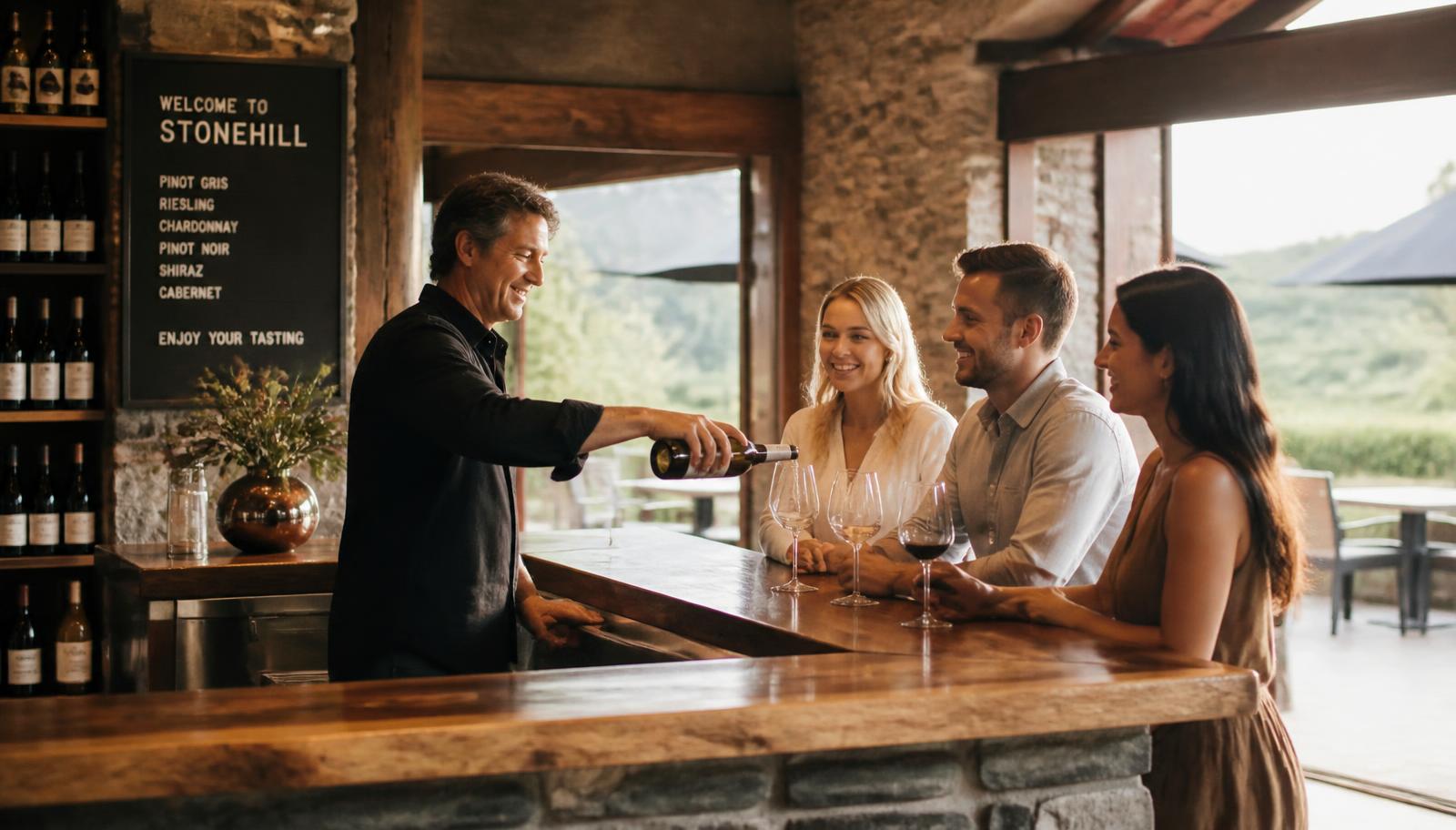
How a visit should go
- Step 01
Arrive booked, on time and honest about your group
A tasting is someone's working appointment, not a shop opening.
Book ahead, give an accurate head count, and message the winery if you are running late or your numbers change. Many cellar doors are staffed by one or two people who have blocked out time for you. Turning up fifteen minutes early is fine; turning up with three extra friends usually is not.
- Step 02
Handle the glass properly
Hold the stem, and don't be alarmed by a small pour.
Holding the stem keeps the wine at its intended temperature and the bowl clean enough to see through. Tasting pours are deliberately small — roughly 30–50 ml — so you can try a full range. Ask before you rinse the glass between wines, and skip strong perfume or scented hand cream entirely, since they carry across a tasting bar.
- Step 03
Use the spit bucket without embarrassment
Spitting is professional behaviour, not rejection.
That bucket on the counter is for spitting and for pouring away wine you have finished with. Nobody is offended. Across three or four stops in a day, spitting is the only way to stay clear-headed and legal to drive, and staff will respect you for it. Drink water between wineries and eat a real lunch.
- Step 04
Ask questions — the good ones
Curiosity is welcome; scoring the wine out loud is not.
Ask what makes the site unusual, how the vintage went, when a wine is best drunk, or what the team drinks at home. Avoid loudly comparing the wine to another producer's or announcing that you dislike something — a simple 'this one isn't for me' is enough. If a wine genuinely tastes faulty, say so quietly and they will usually pour a fresh sample.
- Step 05
Buy something, or say thank you properly
A bottle is the most useful compliment you can pay a small producer.
You are never obliged to buy, and many wineries waive the tasting fee if you do. If you loved the visit, buying a bottle, joining the mailing list or leaving an honest review all matter enormously to small estates. Tipping is customary in some countries, particularly the United States, and unusual in most of Europe — when unsure, ask your guide.
Situations that come up
The questions cellar-door staff are asked most often, answered before you have to ask them.
Many wineries welcome them, some legally cannot. Always check before booking and expect to supervise closely around barrels and equipment.
Common in rural estates, banned in production areas. Ask first, keep them leashed, and never assume the resident winery dog wants company.
Perfectly normal. Say so when booking — most wineries offer juice, water or a reduced fee for a non-drinking guest.
Six or more usually needs a special booking, sometimes a private room and a minimum spend. Never spring it on arrival.
Fine in most tasting rooms; ask before filming staff or entering cellars, where flash and tripods can be a hazard.
Mention allergies and vegan requirements when booking if food is involved — rural kitchens cannot improvise at short notice.
The short version
- Book ahead and confirm 24–48 hours before arrival.
- Skip perfume, aftershave and scented lotion on tasting days.
- Hold the glass by the stem, and use the spit bucket freely.
- Taste in the order poured — usually light to heavy, dry to sweet.
- Keep your voice at conversation level; tasting rooms are small.
- Never drive after tasting unless you have genuinely been spitting.
Frequently asked questions
Is it rude to spit out wine at a winery?
Not at all — it is expected. Spitting lets you taste a full range without becoming intoxicated and is standard practice among professionals. Every tasting room provides a bucket for exactly this purpose.
Do I have to buy wine after a tasting?
No. Tasting fees exist so you are not obliged to buy. That said, many producers waive the fee with a purchase, and buying a bottle is the most meaningful way to support a small estate you enjoyed.
Should I tip at a winery?
It depends on the country. Tipping tasting-room staff is common in the United States and parts of Canada, and unusual across most of Europe, where the tasting fee covers service. If a guide has given you extended personal attention, a tip is always welcome.
What should I wear to a winery?
Smart casual with closed, comfortable shoes. Cellars are cold and often damp, vineyard walks involve uneven ground, and layers matter more than style. Avoid strong fragrance, which interferes with everyone's tasting.
Can I visit a winery without an appointment?
Larger commercial cellar doors often accept walk-ins during posted hours, but small producers are usually appointment-only. Checking the winery's listing or calling ahead avoids a wasted drive.
How long does a winery tasting take?
A standard cellar-door flight runs 30 to 45 minutes; a seated or guided tasting with a tour typically takes 60 to 90 minutes. Plan roughly two hours per stop once you include travel, buying and a look around.
How much does a wine tasting cost?
Most cellar doors charge a modest fee per person for a flight, often waived or credited when you buy a bottle. Reserve, library and food-paired tastings cost more and almost always need booking ahead.
Can I bring children or dogs to a winery?
Many rural estates welcome both, particularly outdoors, but policies vary widely and some sites cannot accept under-18s in production areas at all. Check the winery’s own page or call before you arrive.
Is it rude to say I don’t like a wine?
Not at all, as long as you are describing your taste rather than judging their work. Saying a wine is too oaky or too sweet for you helps the host pour something you will enjoy, which is exactly their job.
Should I eat before a wine tasting?
Yes. A proper meal beforehand slows alcohol absorption and steadies your palate. Drink water between stops too, and use the spit bucket if you are tasting at more than one or two wineries.
Do I need to book a wine tasting in advance?
At small producers, almost always — they may have no dedicated tasting staff. Larger estates often take walk-ins midweek but fill on weekends and holidays. Booking also lets them prepare for group size and access needs.
Read next
The guides in this series build on each other. Here is where to go from here.
- How to Taste Winehow to taste wine without the theatreThe five-step method staff expect you to use at the bar.
- Planning a Wine Tripbuilding a sensible tasting itineraryHow many wineries fit in a day, and how to get between them.
- How to Read a Wine Labelreading the bottles in front of youProducer, place, vintage and classification, explained plainly.
- A Guide to Wine Stylesordering the flight light to heavyA quick tour of styles so the tasting order makes sense.
- Wine & Food Pairing Basicschoosing wine for the winery restaurantFive pairing ideas that work anywhere on the lunch menu.